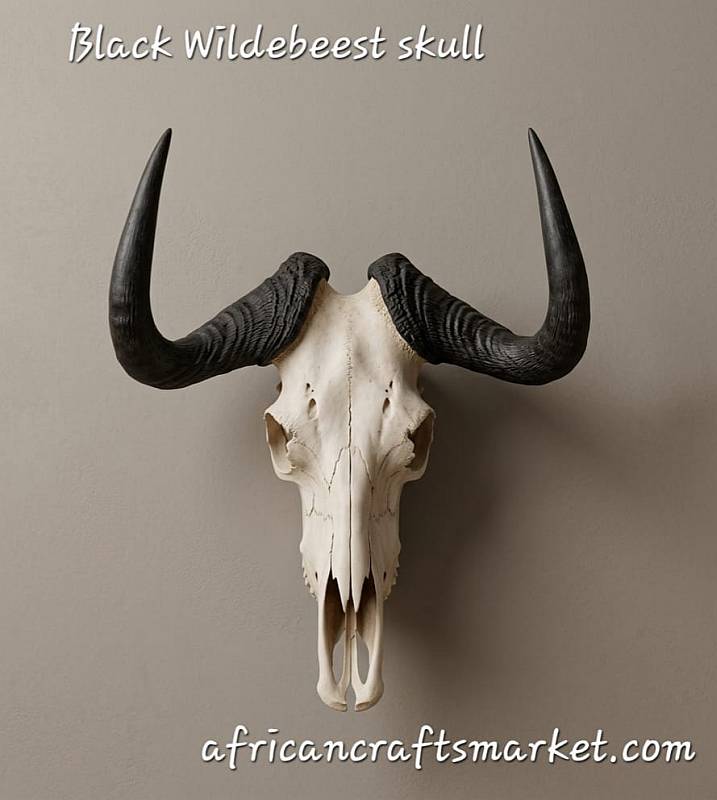
African Black Wildebeest skull
Click on image for larger view
Black Wildebeest Horn Skull
$179-00
Region: South Africa
Material: Horn / skull
Size: 55cm X 40cm (H x W)
Sold out

African Black Wildebeest skull
Size: 55cm X 40cm (H x W)
An African Black Wildebeest skull/horn set that has been treated,bleached and cleaned, ready for export. The Black Wildebeest skull is A grade quality Black Wildebeest skull that can easily be placed on a shield for easy hanging
All Black Wildebeest skulls require permits for export purposes. The price of the permit is included in the shipping cost.
All sizes listed are approximate. The Wildebeest skull you purchase and receive may differ just slightly in size, look, and/or pattern from the Wildebeest skull shown in the picture because of the nature African animal skull each skull is unique.
We are registered with KZN Wildlife in KwaZulu Natal, South Africa who are our local conservation authorities in our area, we obtain any documentation needed from them for any items that is needed for your country. You can feel assured that you have bought from a legal, registered trader.
Because of the nature of this type of products the pictures on this page are not the actual item you will receive The product will be similar with slight differences in size, look or color.
If you are looking for other African game skulls return to our main African animal skulls page

Other styles skulls available on our main skull horns page


To view other items crafted from Blue Wildebeest products click the images above
Facts about this animal
The ungainly gnu earned the Afrikaans name wildebeest, or "wild beast," for the menacing appearance presented by its large head, shaggy mane, pointed beard, and sharp, curved horns. In fact, the wildebeest is better described as a reliable source of food for the truly menacing predators of the African savanna: lions, cheetahs, wild dogs, and hyenas.
Black Wildebeest are also known as: White-tailed Gnu and are dark brown/black in colour. The name ‘black” of the black wildebeest is misleading as the animal is a dark brown with a white tail. Today, around 1.5 million gnus/ wildebeest populate different regions of the earth, classified primarily into two species, namely, black wildebeest and blue wildebeest, with distinctive facets of its living habits and behavior. The Black Wildebeest however is by far the fewer populated and had been placed on the TOPS list as they are protected and watched to make sure that their numbers remain stable.
They have been reintroduced to various parts of Africa mainly Southern Africa and their numbers are increasing, which is good for the future of this species. These odd looking antelope were almost exterminated by white settlers, who viewed them as pests, and also valued their tails, which were used as fly swats. Konnos (Greek) the beard; khaite (Greek) flowing hair: referring to the conspicuous hair on the face and neck. Gnou is a Hottentot name for these antelope.
Both male and female black wildebeest have well-developed horns that have their origins in a thickened boss on the head and then extend forwards in a deep, downwards curve. The horns of cows are thinner than those of the bulls and are thus lighter.
Factsheet
Scientific classification
- Swahili Name:
- Scientific Name: Connochaetes gnou
- Size: Up to 2 m (6.6 ft)
- Weight: 1140 to 280 kg (males weigh more than females)
- Lifespan: 20 years
- Habitat: Open grassy plains
- Diet: Grazers
- Gestation: 8 to 81/2 months
- Predators: Lions, cheetahs, hunting dogs, hyenas
Conservation status: Least concern / abundant
Shopping Cart
View shop-cart/checkout
Search
Website currency
Prices in US$
Shop Products
- Abstract art
- African figures
- African heads
- Animal skins
- Bead work
- Belts
- Candles
- Candle holders
- Canes
- Chessboards
- Clothing
- Cooking utensils
- Cushions
- Drums
- Footwear Shoes
- Furniture
- Gemstones
- Hats
- Horns & skulls
- Jewelry
- Leather
- Lights & Shades
- Masks
- Ostrich eggs
- Paintings
- Stone animals
- Stone Eggs
- Stone tableware
- Table cloths
- Wire art
- Wood animals
- Wood tableware
- Woven baskets
- Zulu shields
- .


Useful Links

Featured Item


Info
We work with crafters throughout Africa to find a vast range of handcrafted items and then send them worldwide.
All items are produced in Africa by local Africans